Eurydice
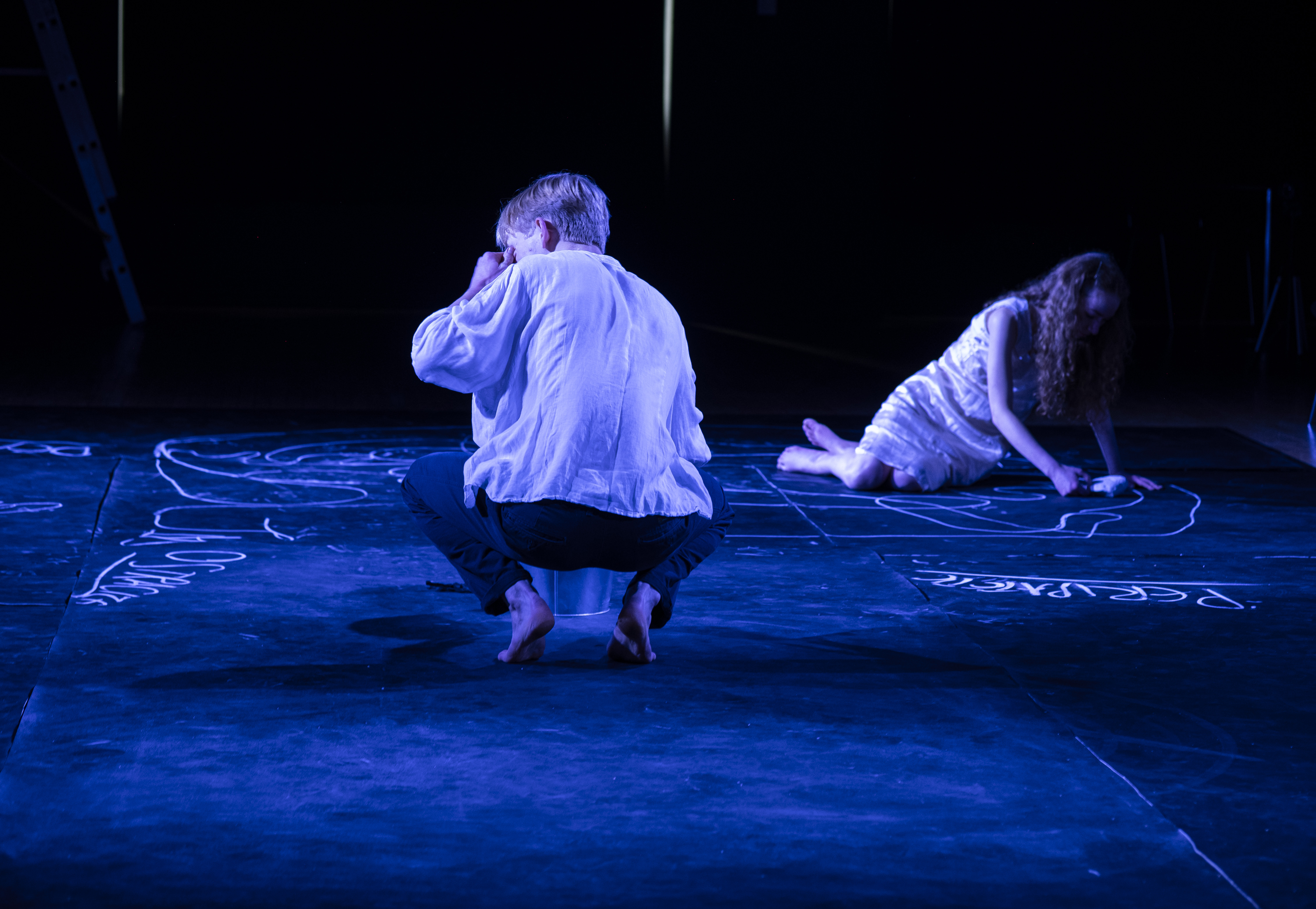
- Role
- Director
- Writer
- Sarah Ruhl
- Format
- Stage · 1 hr 40 min
- Date
- 2026
Nominated for 9 Manchester In-Fringe Theatre Awards
Sarah Ruhl reimagines the Greek myth through Eurydice's eyes. Dying too young on her wedding day, she journeys to the underworld, reunites with her father and struggles to remember her lost love.
In the preface to the script, Sarah Ruhl writes, “this play is for my father.” Ruhl’s father died from cancer when she was just twenty years old. Many of the conversations and words spoken by ‘The Father’ in the play are taken verbatim from Ruhl’s own father before his death. In this way, Eurydice becomes more than a retelling of an ancient myth; it becomes an intimate exploration of memory, grief and loss, and a deeply personal means through which Ruhl revisits and reimagines her relationship with her father.
The theme of grief and loss is inescapable throughout the play, with each character experiencing loss in different forms. Certainly, Eurydice explores grief through Eurydice’s emotional experience of death and separation, particularly through her relationship with her father. Ruhl presents grief as disorienting and inseparable from the fear of forgetting: in the Underworld, memories fade, language breaks down, and the boundaries between what is remembered and what is lost become increasingly fragile. Ruhl places Eurydice’s longing for her father and her romantic bond with Orpheus at the heart of the play, drawing comparison between parental loss and romantic love, suggesting that perhaps parental loss can be deeper, and more defining, than romantic love. The repeated failure of communication between the characters further exposes the distance grief creates, a distance that cannot ever be entirely overcome. The play’s cyclical ending ultimately reinforces the inevitability of loss.
“A lively, beautiful, and deeply emotional take.”
The Mancunion
“The directorial vision of this production is clear: from the design, to the staging, to the acting, what directors Martha Pardue and Hattie Wood deliver is an ethereal, mystical tragedy, untethered by era or genre.”
The Mancunion